|
Haicheng Huang 黄海城 I am a rising fourth-year undergraduate student at Shanghai Jiao Tong University, majoring in Information Engineering. I'm currently a research assistant at Shanghai Jiao Tong University, working with Prof. Jiangchao Yao. I was also fortunate to work with Prof. Mingyuan Zhou from UT Austin and mentor Huangjie Zhengduring my undergraduate. |
|
Research Interests
My research interests lie in generative models, especially diffusion models and representaion learning.
I want to explore: I am currently seeking a Ph.D. opportunity for Fall 2026 in computer science! |
News
[Sept. 2025] Wino is accepted by NeurIPS 2025 Workshop. |
Publications
|
|
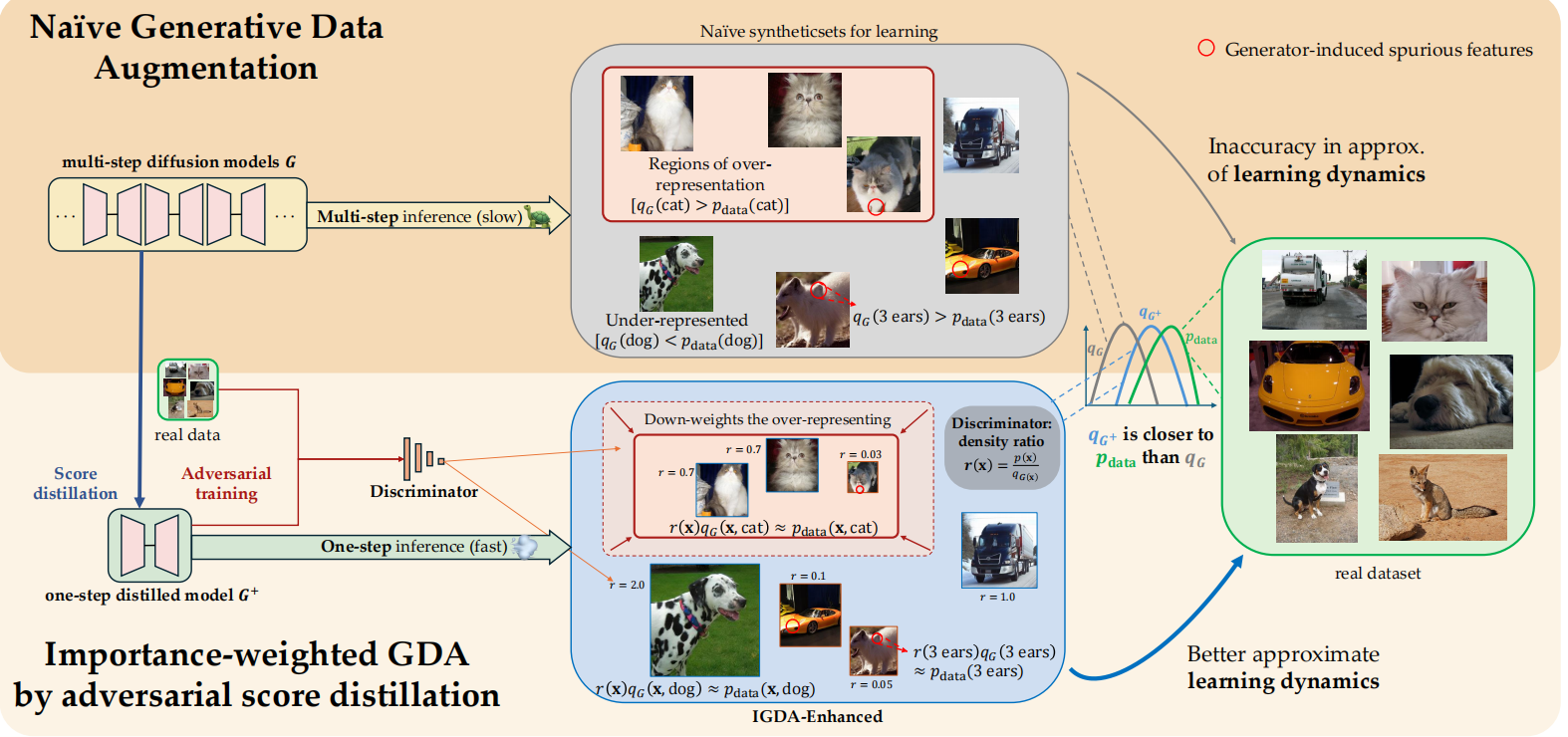
Ruyi An*, Haicheng Huang*, Huangjie Zheng, Mingyuan Zhou NeurIPS, 2025 paper We propose DAR-GDA, a three-stage augmentation pipeline that unites model **D**istillation, **A**dversarial alignment, and importance **R**eweighting that makes diffusion-quality augmentation both fast and optimized for improving downstream learning outcomes. Our approach not only surpasses conventional non-foundation-model GDA baselines but also remarkably matches or exceeds the GDA performance of large, web-pretrained text-to-image models, despite using solely in-domain data. |
|
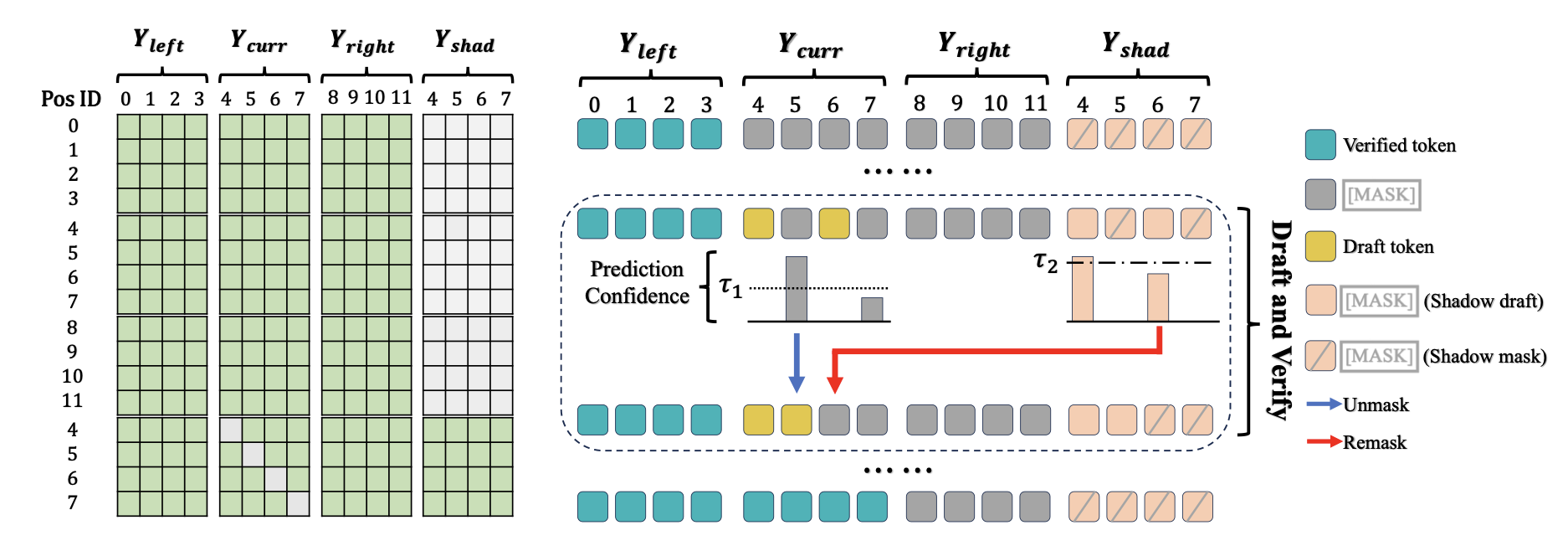
Feng Hong, Geng YU, Yushi Ye, Haicheng Huang, Huangjie Zheng, Ya Zhang, Yanfeng Wang, Jiangchao Yao In submission paper we introduce Wide-In, Narrow-Out (WINO), a training-free decoding algorithm that enables revokable decoding in DLLMs. WINO employs a parallel draft-and-verify mechanism, aggressively drafting multiple tokens while simultaneously using the model's bidirectional context to verify and re-mask suspicious ones for refinement. |
|
The website is built upon this template. |